How to Soften Your Face With Makeup?
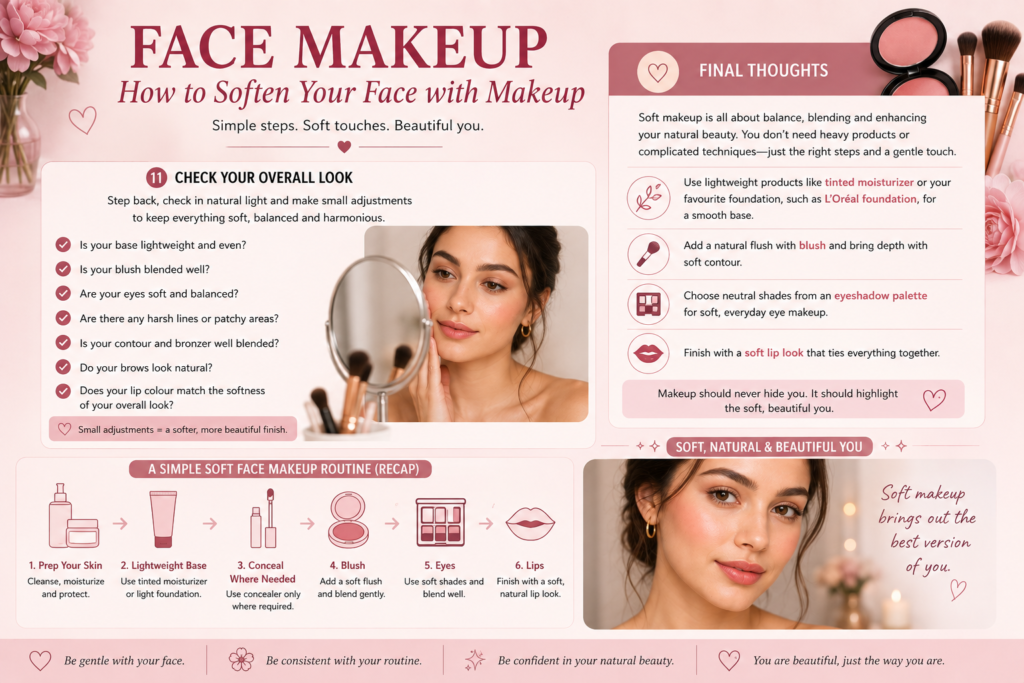
Makeup is not only about adding color or definition. The right face makeup techniques can help create a softer, fresher, and more balanced appearance while still looking natural. Instead of using heavy layers or sharp contouring, you can work with lightweight base products, soft blush placement, subtle eye colors, and carefully blended edges.
A softer makeup look usually focuses on creating smooth transitions rather than strong lines. Your goal is to make the different areas of your face look harmonious. Products such as tinted moisturizer, blush, an eyeshadow palette, and a well-matched foundation can all help achieve this effect.
The best part is that you do not need a complicated routine. A few small changes in application can make your everyday makeup look more polished and gentle.
What Does “Soft” Makeup Actually Mean?
Soft makeup does not mean changing your natural features or following a particular beauty standard. It simply means using makeup in a way that creates a subtle, blended finish.
A soft makeup look often includes:
- Lightweight and even-looking base makeup
- Blended blush instead of harsh lines
- Neutral or softly colored eyeshadow
- Naturally defined brows
- Softly blended lip color
- Minimal, well-blended contour
- A healthy-looking finish rather than excessive coverage
When choosing face makeup, think about balance. If one area has very strong definition, keeping the rest of the look softer can make the overall appearance feel more natural.
Start With Skin Preparation
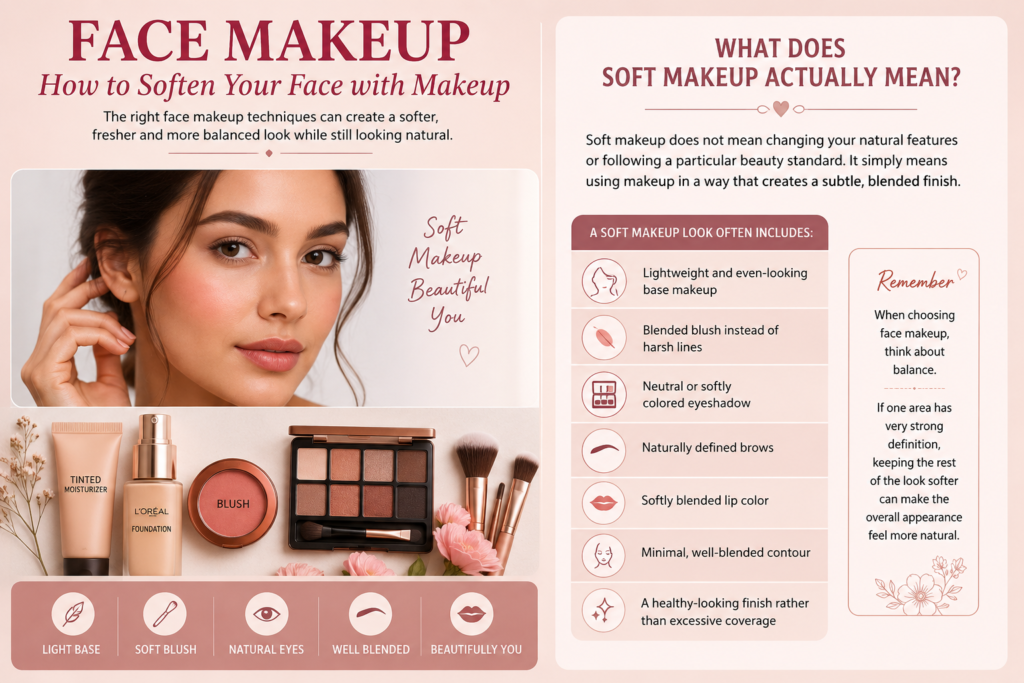
Good makeup application begins before foundation or concealer. Clean, moisturized skin generally provides a smoother surface for makeup.
Start with a gentle cleanser if needed, followed by a moisturizer suitable for your skin type. During the daytime, sunscreen should also be part of your routine.
Allow skincare products a little time to settle before applying makeup. Applying too many products immediately one after another can sometimes cause makeup to move or pill.
For a soft finish, avoid applying a thick base simply because you want more coverage. Instead, use a smaller amount and build coverage only where necessary.
Choose a Lightweight Base
One of the easiest ways to make your face makeup look softer is to avoid an unnecessarily heavy foundation layer.
A tinted moisturizer can be a useful option when you want light coverage with a more natural-looking finish. It can help even out the appearance of your complexion while allowing more of your natural skin to show through.
If you need additional coverage, apply foundation selectively rather than automatically covering the entire face with a thick layer.
A L’Oréal foundation, for example, can be incorporated into a soft makeup routine depending on the specific formula and finish you choose. The important part is matching the shade and applying an appropriate amount for the look you want.
Use a damp makeup sponge or a suitable brush to blend the product evenly. Pay particular attention to areas around the jawline, hairline, and nose so there are no obvious edges.
Keep Your Base Thin and Even
A common mistake in face makeup is assuming that more product will automatically create a better finish. In reality, excess base can make makeup look heavier.
Apply your base in thin layers. Start with a small amount in the center of your face and blend outward. If additional coverage is required, add a little more product only to those areas.
You can also use concealer where needed instead of adding another layer of foundation everywhere.
This technique gives you control over coverage while keeping the overall look lighter.
Use Blush to Add Softness
Blush is one of the most effective products for creating a fresh and softer makeup appearance.
Rather than drawing a sharp line across the cheeks, apply blush gradually and blend the edges. Cream and liquid blushes can work particularly well for a seamless finish, while powder blush can provide a softer, more controlled application when used lightly.
Choose a shade that complements your overall makeup. Soft pink, peach, rose, and muted berry tones can all create different effects depending on your complexion and the rest of your look.
The key is not simply where you put the blush, but how well you blend it.
If you use too much product at once, it can become difficult to soften. Start with a small amount, blend, and build gradually.
Soften Your Contour
Contouring can add definition, but strong contour lines can make a makeup look appear more dramatic.
For softer face makeup, use a small amount of contour or bronzer and blend it thoroughly. Instead of creating obvious stripes, aim for subtle shadow and warmth.
You do not have to contour every part of your face. A little definition around selected areas can be enough.
Bronzer can also help bring warmth to the complexion. Use it lightly around areas where the sun would naturally add warmth, and always blend carefully.
The goal is a gradual transition between shades rather than visible boundaries.
Choose Soft Eyeshadow Colors
Your eye makeup can also influence how soft your entire look appears.
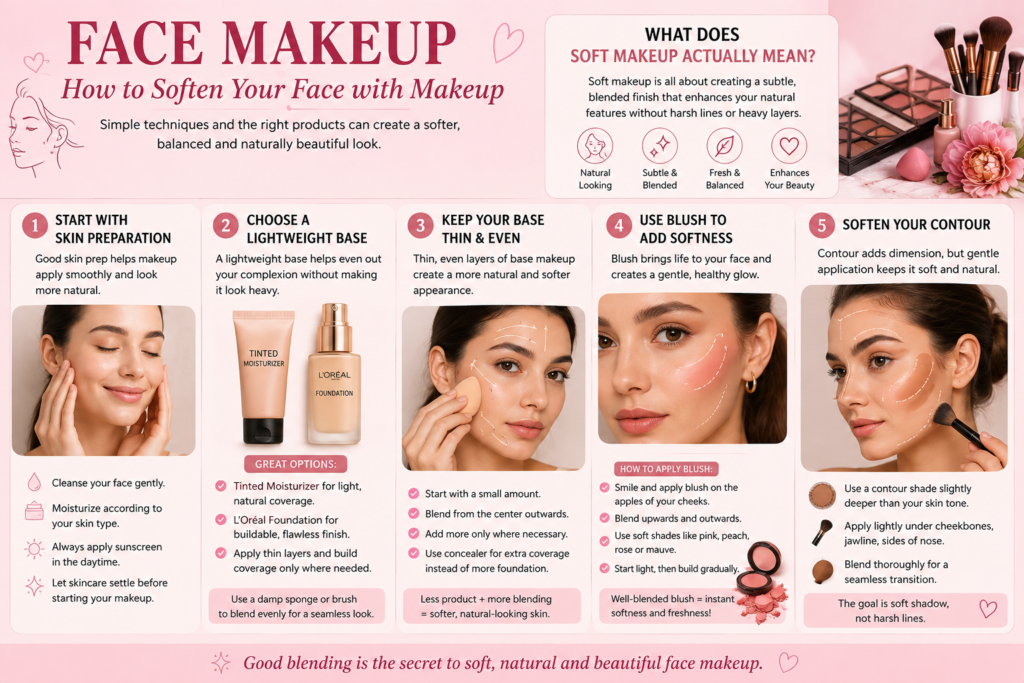
An eyeshadow palette with neutral, warm, rosy, or muted shades gives you plenty of options for creating a subtle eye look. You do not need several intense colors to make your eyes stand out.
Start with a light shade across the lid. Add a slightly deeper shade to the crease and blend the edges until there are no harsh transitions.
Avoid placing very dark colors too heavily if your goal is a softer appearance. Instead, build intensity slowly.
A good eyeshadow palette can make this process easier because you can combine lighter and deeper shades from the same color family.
Keep Eyeliner Soft
Sharp, graphic eyeliner can create a more defined appearance. If you want softer face makeup, consider using a brown or softer black liner and blending it gently.
You can also apply a small amount of eyeshadow close to the lash line instead of creating a very precise eyeliner shape.
Mascara can be applied normally, focusing on separating and defining the lashes rather than creating an extremely dramatic effect.
The idea is to make your eyes look defined without allowing the eye makeup to overpower the rest of the face.
Pay Attention to Your Brows
Brows frame the face, so their appearance can affect the overall makeup style.
For a softer look, avoid creating overly sharp edges with a brow pencil. Instead, use light strokes that resemble natural hairs and blend the product where necessary.
A clear or lightly tinted brow gel can help keep the hairs in place without making the brows appear heavily filled.
Remember that brows do not need to look perfectly identical. Natural-looking variation can actually make the overall makeup appear softer.
Blend, Blend, Blend
If there is one rule that makes a major difference in face makeup, it is blending.
Harsh edges can make even high-quality makeup appear less natural. After applying foundation, concealer, contour, blush, or eyeshadow, take a moment to check the transitions.
Look closely at:
- Jawline
- Hairline
- Nose
- Cheek edges
- Under-eye area
- Eyeshadow crease
- Contour boundaries
A clean brush or makeup sponge can help soften areas where too much product has accumulated.
Use Powder Strategically
Powder is useful for controlling shine and helping makeup last, but applying too much can make a soft makeup look appear dry or overly matte.
Instead, apply powder where you actually need it. For example, you might use a small amount around the center of the face while leaving areas that naturally look more radiant with less powder.
If you prefer a luminous finish, you can keep powder application minimal.
The right balance depends on your skin type, climate, skincare routine, and the products you’re using.
Finish With a Soft Lip Look
Your lip makeup can complement the softness of the rest of your face.
Instead of using a very sharp lip outline, you can apply a lip color directly and gently blend the edges. Tinted balms, sheer lip colors, and softly pigmented products can work well for an everyday appearance.
If you prefer lipstick, choose a shade that works with your blush and eyeshadow rather than competing with them.
For example, a soft rosy lip can pair nicely with rosy blush and neutral eyeshadow.
Common Face Makeup Mistakes That Can Make a Look Harsh
Some techniques can unintentionally make makeup appear heavier than intended.
Using too much foundation
Heavy foundation can make the complexion look less natural. Apply thin layers and build coverage gradually.
Applying blush too heavily
A large amount of blush can become difficult to blend. Start with less product and increase it slowly.
Choosing very contrasting contour
A contour shade that is too dark or too warm can create obvious lines. Use a suitable shade and blend it thoroughly.
Overloading the eyes
Using several dark shades from an eyeshadow palette at once can make the eye area look more dramatic. Soft transitions usually work better for this style.
Skipping the jawline blend
Even a perfectly matched foundation can look noticeable if it stops abruptly at the jaw. Blend the base down and around the edges for a seamless finish.
A Simple Soft Face Makeup Routine
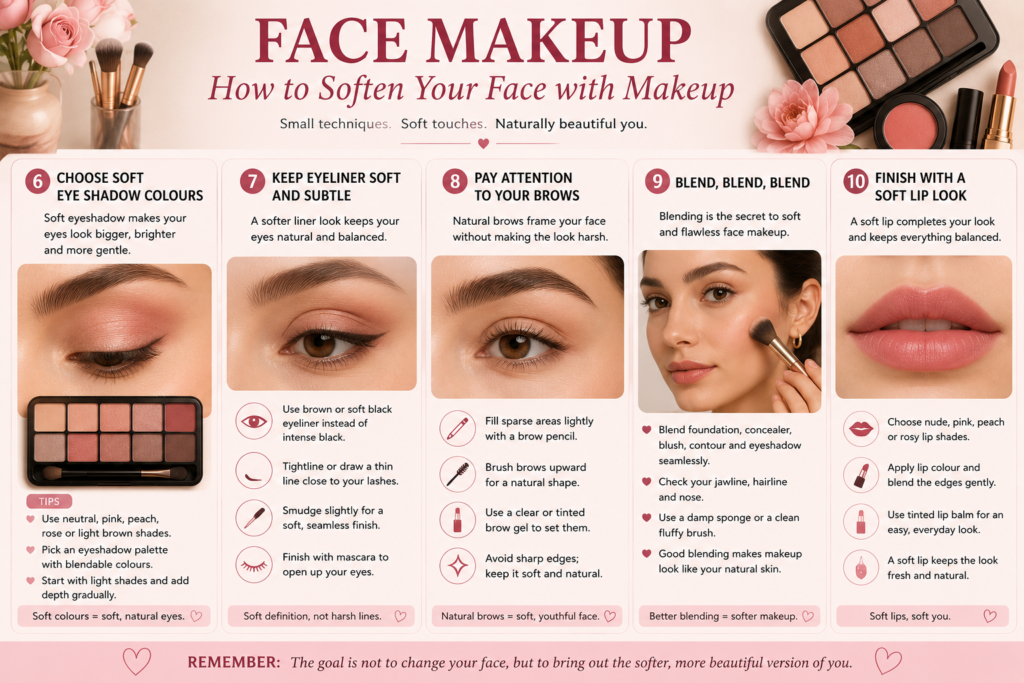
If you want an easy everyday routine, try this order:
- Prepare your skin with moisturizer and sunscreen.
- Apply a tinted moisturizer or lightweight foundation.
- Use concealer selectively where extra coverage is needed.
- Apply a small amount of blush and blend it outward.
- Add subtle bronzer or contour if desired.
- Choose two or three complementary shades from an eyeshadow palette.
- Define your lashes with mascara.
- Keep brows naturally filled and brushed.
- Add a soft lip color.
- Check the entire look and blend any visible edges.
You can adapt this routine depending on the occasion. For everyday makeup, fewer products may be enough, while an evening look can include additional definition.
Does Soft Makeup Work for Every Face Shape?
Yes. Soft makeup is adaptable because it is more about blending and balance than following one fixed placement rule.
Different people may prefer different blush, contour, or eyeshadow placement depending on their features and personal style. Rather than trying to completely reshape your face, experiment with small adjustments and see what feels comfortable and natural to you.
Makeup should be a creative tool, not a requirement to change the way you look.
Final Thoughts
Learning how to soften your face with makeup is mostly about choosing the right amount of product and blending it well. A lightweight base, carefully placed blush, subtle contour, soft eyeshadow, and naturally defined brows can create a balanced everyday look.
Whether you choose a tinted moisturizer for light coverage or a L’Oréal foundation when you want more coverage, focus on creating thin, even layers. Pair that base with a well-blended blush and a neutral eyeshadow palette, and your face makeup can look polished without appearing heavy.
The most important technique is simple: start with less product, build gradually, and blend the edges. That gives you more control and makes it easier to create the soft finish you want.
FAQs
1. How can I make my face look softer with makeup?
Use lightweight base makeup, softly blended blush, subtle contour, neutral eyeshadow, and naturally defined brows. Avoid harsh lines and blend every product carefully.
2. Is tinted moisturizer good for a soft makeup look?
Yes. A tinted moisturizer can provide light coverage and an everyday finish while allowing more of your natural complexion to show through.
3. Where should I apply blush for a softer look?
Apply a small amount of blush to the cheeks and blend the edges gradually. Start with less product and build the intensity instead of applying a large amount immediately.
4. Can foundation make makeup look harsh?
Foundation itself does not necessarily make makeup look harsh. Using too much product or failing to blend it around the jawline and hairline can make the base appear heavier.
5. What eyeshadow colors are best for soft makeup?
Neutral, peach, rosy, taupe, brown, and other muted shades can work well. A versatile eyeshadow palette with complementary shades makes blending easier.
6. Can I use L’Oréal foundation for soft face makeup?
Yes. A L’Oréal foundation can be part of a soft makeup routine. Choose a suitable shade and apply a thin layer, adding more coverage only where necessary.
7. How do I stop contour from looking harsh?
Use a suitable contour shade, apply a small amount, and blend thoroughly. You can also soften the edges with your foundation brush or makeup sponge.
8. Does soft makeup require many products?
No. You can create a soft look with a few essentials such as base makeup, concealer, blush, mascara, eyeshadow, and lip color. The application technique matters more than having a large collection.